How to Choose a Vision Correction Doctor in North Riyadh: A Complete Patient Guide
A practical guide to LASIK, PRK, and SMILE candidacy — and what to look for in a vision correction specialist in Riyadh.
If you are researching LASIK or laser vision correction in Riyadh, the most important decision you will make isn’t which laser platform gets used — it’s which doctor examines your eyes first. Refractive surgery outcomes depend heavily on an accurate pre-operative assessment: your corneal thickness and shape, the stability of your prescription, your tear film health, and a realistic conversation about what surgery can and cannot do for you. A confident recommendation without that groundwork is a warning sign, not reassurance.
This guide walks through what vision correction actually involves, which factors determine whether someone is a reasonable candidate, how the main procedures differ, and — specifically — what to look for when evaluating a vision correction doctor in North Riyadh. It closes with information about Dr. Muteb Al-Shuaibi, a Riyadh-based ophthalmology consultant, so you can judge his practice against the same criteria.
What to Look for Before Choosing a Vision Correction Doctor
Before you contact any clinic, it helps to know what a responsible evaluation looks like. At minimum, expect:
- A detailed eye examination, not a five-minute screening
- Corneal topography or tomography (a 3D map of the corneal surface)
- A dry-eye assessment
- A review of your prescription history to confirm stability
- An honest conversation about which procedure, if any, fits your eyes
- Clear disclosure of risks, not just benefits
If a clinic promises a specific outcome before examining you, that is a reason to be cautious, not encouraged.
What Is Vision Correction?
Vision correction is a general term for treatments that reduce refractive error — the reason images don’t focus sharply on the retina without glasses, contacts, or surgery. In an ophthalmology context, it usually refers to laser-based or lens-based procedures that reshape or supplement the eye’s optical system, most often to treat myopia, hyperopia, astigmatism, or presbyopia. According to the American Academy of Ophthalmology, laser refractive surgery works by reshaping the cornea so that light focuses more precisely on the retina, reducing dependence on corrective lenses for many everyday tasks.
It’s worth noting from the outset: vision correction surgery aims to reduce reliance on glasses and contacts, not to guarantee “perfect” vision, and some patients may still need glasses for specific tasks such as reading or night driving afterward.

Common Vision Problems and Symptoms That Lead Patients to Search for a Vision Correction Doctor
Most people don’t start by searching for “LASIK” or “refractive surgery” — they start by noticing a problem. Recognizing your own symptoms in the list below can help you describe your situation more precisely during a consultation.
- Blurry distance vision — difficulty reading road signs, whiteboards, or screens from across a room, often the first noticeable sign of myopia.
- Blurry near vision — trouble focusing on a phone, book, or menu, which can point to hyperopia or, in people over roughly 40, presbyopia.
- Frequent changes in glasses or contact lens prescription — a prescription that keeps shifting year after year is a reason to investigate stability before considering surgery, not necessarily a reason to avoid it.
- Glare and halos around lights at night — commonly reported by people with astigmatism or larger pupils, and also a known temporary side effect some patients experience after laser vision correction itself.
- Eye strain, headaches, or fatigue with screen use — can result from uncorrected refractive error, dry eye, or both, and is worth mentioning during an evaluation.
- Discomfort or intolerance wearing contact lenses — a very common reason patients begin researching vision correction as a longer-term alternative to daily lenses.
- Progressively distorted or “stretched” vision, especially at a younger age — this pattern, rather than simple blur, can be an early sign of keratoconus (a thinning and irregular bulging of the cornea), which requires a different diagnostic and treatment pathway than routine refractive error, sometimes including corneal cross-linking rather than standard laser vision correction.
- Sensitivity to light or frequent eye rubbing — worth flagging to your doctor, since habitual eye rubbing is also considered a risk factor for corneal thinning conditions.
- Dry, gritty, or tired-feeling eyes — relevant both as a standalone complaint and as a factor that can influence which vision correction procedure, if any, is recommended.
If your main complaint is progressive distortion, irregular astigmatism, or a rapidly changing prescription rather than straightforward blur, it is worth telling your doctor this clearly, since it may shift the diagnostic workup toward corneal-shape conditions like keratoconus before any refractive-surgery discussion begins.
Why Choosing the Right Vision Correction Doctor Matters
Refractive surgery is elective and irreversible in key respects — once corneal tissue is reshaped, that change is largely permanent. The single biggest driver of a good outcome is not the brand of laser used but the quality of the pre-operative screening and the surgeon’s judgment about who is, and isn’t, a suitable candidate. A doctor who is willing to say “you are not a good candidate right now” is often more trustworthy than one who says yes to everyone. This is why the selection of the doctor — their diagnostic process, their experience, and their willingness to discuss limitations — matters more than any single piece of marketing.
Common Vision Problems That May Be Treated With Refractive Procedures
Myopia (Nearsightedness)
Myopia occurs when the eye focuses light in front of the retina rather than directly on it, making distant objects appear blurry while near objects stay relatively clear. It is one of the most common conditions treated with LASIK, PRK, and SMILE.
Hyperopia (Farsightedness)
Hyperopia occurs when light focuses behind the retina, which can blur near vision more than distance vision, though both can be affected. Hyperopia correction is technically more limited than myopia correction, and candidacy depends on the degree of refractive error and corneal characteristics.
Astigmatism
Astigmatism results from an irregularly shaped cornea or lens, which causes light to focus at multiple points rather than one, blurring vision at all distances. Most modern laser platforms, including the technology used in LASIK and PRK, can correct low to moderate astigmatism in appropriately selected patients.
Presbyopia
Presbyopia is an age-related loss of the eye’s ability to focus on near objects, caused by gradual stiffening of the lens rather than a corneal shape problem. It typically begins in the early-to-mid forties and is not fully corrected by standard corneal laser procedures the way myopia or astigmatism can be; it may require different strategies, which a comprehensive assessment can clarify.
Modern Vision Correction Procedures
LASIK
LASIK (Laser-Assisted In Situ Keratomileusis) involves creating a thin corneal flap, lifting it, reshaping the underlying corneal tissue with an excimer laser, and repositioning the flap. It is one of the most established and widely performed refractive procedures worldwide.
Femto-LASIK
Femto-LASIK is a variant of LASIK in which the corneal flap is created using a femtosecond laser instead of a mechanical blade (microkeratome), which many surgeons consider allows for more precise and consistent flap creation.
PRK
PRK (Photorefractive Keratectomy) reshapes the cornea’s surface directly, without creating a flap; instead, the thin outer epithelial layer is removed and allowed to regenerate after the laser treatment. Recovery and visual stabilization typically take longer than LASIK, but PRK avoids flap-related risks entirely, which can make it a preferred option for people with thinner corneas or certain lifestyle or occupational risk factors.
SMILE
SMILE (Small Incision Lenticule Extraction) uses a femtosecond laser to create a small lens-shaped piece of tissue (a lenticule) within the cornea, which is then removed through a very small incision — without creating a large flap or using an excimer laser for the primary reshaping step. Research summarized by the American Academy of Ophthalmology notes that SMILE has been associated with a lower rate of dry-eye symptoms at six months compared with LASIK, along with less disruption of corneal nerve fibers, and a shorter period of activity restriction after surgery.
How These Procedures Differ
| Factor | LASIK | PRK | SMILE |
|---|---|---|---|
| Corneal flap | Yes (thin flap created and repositioned) | No flap; surface epithelium removed | No large flap; small incision only |
| Typical recovery of functional vision | Often within 24–48 hours | Several days to about a week, sometimes longer | A few days, vision may be transiently softer at first |
| Activity restrictions | Around one month for strenuous activity | Around one month for strenuous activity | Commonly shorter, around three days, per surgeon guidance |
| Dry-eye considerations | More likely to cause temporary dry eye due to corneal nerve disruption at the flap | Can also affect the ocular surface, generally considered manageable | Some studies report comparatively lower dry-eye symptoms |
| Best suited for (general pattern) | Stable low-to-moderate myopia/astigmatism, adequate corneal thickness | Thinner corneas, certain occupations, flap-related risk concerns | Patients meeting SMILE-specific corneal and refractive criteria |
| Minimum general corneal thickness threshold cited in literature | Residual bed thickness typically ≥ 300 microns | Not flap-dependent; overall thickness still assessed | Residual bed thickness threshold can be lower, around ≥ 250 microns |
This table reflects general patterns described in ophthalmology literature. It is not a substitute for an individualized assessment, since actual suitability always depends on your own corneal measurements, refractive error, ocular surface health, and medical history.
Importantly, no single procedure is universally “better.” Ophthalmology sources consistently frame the choice as a matching exercise between a patient’s anatomy, lifestyle, and risk tolerance and each procedure’s characteristics — not a hierarchy with one winner.
Who May Be a Candidate for Laser Vision Correction?
Stable Prescription
Most surgeons want to see a refraction that has been stable for at least a year before proceeding, since operating on a prescription that is still changing can lead to under- or over-correction as the eye continues to shift.
Corneal Thickness and Shape
Corneal thickness and topography determine how much tissue can safely be reshaped and whether a person’s cornea is at risk of developing an irregular bulge (ectasia) after surgery. According to the American Academy of Ophthalmology, thorough corneal measurement is a required part of every LASIK evaluation, and certain corneal shapes or thicknesses may rule a person out. See also this overview of candidate-selection criteria across LASIK, PRK, and SMILE.
Overall Eye Health
Active eye disease, certain autoimmune conditions, uncontrolled diabetes, or a history of specific corneal conditions can affect candidacy and must be reviewed individually with an ophthalmologist.
Dry Eye Assessment
Because laser vision correction can temporarily affect the ocular surface, an assessment of existing dry-eye symptoms is a standard part of screening; significant pre-existing dry eye may need to be treated or considered when choosing between procedures.
Realistic Expectations
The American Academy of Ophthalmology specifically cautions that people seeking LASIK for perfect vision without any glasses or contacts under any circumstance may end up disappointed, since some tasks — such as reading or night driving — may still call for corrective lenses afterward. A responsible doctor will discuss this before, not after, your procedure.
Why a Comprehensive Eye Examination Matters
A pre-operative evaluation is not a formality — it is the primary safeguard against poor outcomes. It typically includes measuring corneal thickness and curvature, mapping the corneal surface, checking pupil size, assessing tear production, reviewing your full refractive and medical history, and discussing your visual demands (for example, night driving, screen work, or sport). Skipping or rushing this step is one of the clearest signals of a lower-quality provider, regardless of how advanced their equipment appears.
How to Choose a Vision Correction Doctor in North Riyadh
Relevant Ophthalmology Experience
Look for a doctor who is a qualified ophthalmologist — someone with recognized medical and surgical training in eye care, not simply a technician operating a laser.
Experience With Refractive Surgery
General ophthalmology training covers many eye conditions; refractive surgery specifically benefits from focused, ongoing experience with laser vision correction procedures and the judgment that comes from performing many cases over time.
Comprehensive Pre-Operative Assessment
As outlined above, ask what tests are actually performed before a procedure is recommended. A single autorefractor reading is not sufficient; corneal topography and a dry-eye check should be part of the process.
Modern Diagnostic Technology
Corneal topography systems and modern laser platforms allow for more precise measurement and treatment planning. While technology alone does not replace clinical judgment, up-to-date diagnostic technology used in evaluations supports a more accurate assessment.
Individualized Treatment Planning
Because LASIK, PRK, and SMILE each suit different corneal and lifestyle profiles, a good specialist should be able to explain why a particular procedure — or no procedure at all — is being recommended for your specific eyes, rather than defaulting to whichever service the clinic promotes most heavily.
Clear Explanation of Benefits and Risks
You should leave a consultation understanding both what the procedure can realistically achieve and what risks or limitations apply to your case, including the possibility that you may not be a suitable candidate.
Post-Operative Follow-Up
Vision correction does not end on the day of the procedure. Ask what follow-up visits are scheduled, how long visual stabilization typically takes, and how the clinic handles concerns that arise during recovery.
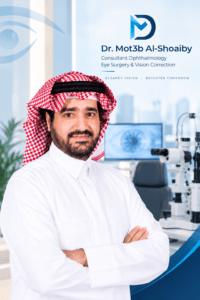
Why Patients May Consider Dr. Muteb Al-Shuaibi for Vision Correction in Riyadh
Dr. Muteb Al-Shuaibi’s clinic is a Riyadh-based consultant ophthalmologist whose practice is centered on vision correction. According to information published on his official website, he holds the Saudi Board certification in ophthalmology and has more than 27 years of experience performing advanced laser procedures, including Femto-LASIK and PRK, alongside intraocular lens implantation (ICL) and surgery for cataracts and glaucoma. His website states that his subspecialty focus includes the anterior segment of the eye — the front portion of the eye that includes the cornea, an area directly relevant to refractive surgery planning.
His clinic is located in North Riyadh, at the Alam Al-Uyoon Complex on Al-Tahlia Street in the Al-Sulaimaniyah district, making it accessible to patients searching specifically for a vision correction specialist in that part of the city.
As with any provider, patients considering a consultation should independently verify current certifications, procedure options, and pricing directly with the clinic, since this information can change over time. A single article cannot substitute for a direct conversation with the doctor about your own eyes.
What Happens During a Vision Correction Consultation?
A typical consultation includes a discussion of your visual history and goals, a series of diagnostic tests (including corneal mapping), a review of your current prescription and its stability, and a conversation about which procedures, if any, may be appropriate. You should have the opportunity to ask questions and should not feel pressured to commit to a procedure during this first visit.
What Happens Before the Procedure?
Before surgery, most clinics require patients to stop wearing contact lenses for a period of time — commonly around two weeks for soft lenses, sometimes longer for rigid lenses — because contact lenses can temporarily alter corneal shape and skew measurements. A final, more detailed set of measurements is usually taken closer to the procedure date to confirm surgical planning.
What Happens During Laser Vision Correction?
While specifics vary by procedure, laser vision correction is generally performed with numbing eye drops rather than general anesthesia, and the active laser treatment itself is typically brief — often just a few minutes per eye. Depending on the procedure, a flap may be created and repositioned (LASIK), the surface epithelium may be treated and left to heal (PRK), or a small lenticule may be removed through a tiny incision (SMILE).
What Should You Expect During Recovery?
Recovery timelines differ by procedure. LASIK patients often notice improved vision within a day, while PRK recovery is typically slower, with more noticeable discomfort for the first several days as the surface epithelium heals. SMILE recovery tends to fall in between, with vision that may feel slightly soft at first before sharpening over the following days. Across all procedures, full visual stabilization can continue for several months, and follow-up visits are used to monitor healing and address any concerns.
Possible Side Effects and Risks
As with any surgical procedure, laser vision correction carries risks. These can include temporary dry eye, glare or halos (particularly at night), under- or over-correction requiring further treatment, and, rarely, more serious complications related to flap healing or infection. Individual risk depends on your eye anatomy, the procedure chosen, and your surgeon’s experience. A responsible doctor will walk through these risks specifically as they apply to you, rather than glossing over them.
Questions to Ask Your Vision Correction Doctor Before Surgery
Below are ten questions worth raising during your consultation. They are meant to help you gather the information you need — not to replace the conversation itself.
- Which procedure is appropriate for my eyes, and why? A good answer should reference your specific corneal measurements and refractive error, not a general sales pitch.
- What diagnostic tests will I need? Confirm that corneal topography and a dry-eye evaluation are included.
- Is my prescription stable? Ask how your stability was determined and over what timeframe.
- Is my cornea suitable in thickness and shape? Ask what your measurements were and how they compare to the thresholds used for your recommended procedure.
- Do I have dry eye, and does it affect my options? Ask whether this changes which procedure is recommended.
- What are the realistic benefits for someone with my prescription? Ask specifically whether you might still need glasses for certain tasks afterward.
- What are the potential risks in my case? Ask about risks specific to your eyes, not just a general list.
- What should I expect during recovery, day by day? Ask about time off work, activity restrictions, and when vision typically stabilizes.
- What follow-up care is provided, and for how long? Ask how many post-operative visits are included and what happens if you have concerns between visits.
- What happens if I am not a good candidate? A trustworthy doctor should be comfortable answering this directly, including whether any alternative options exist.
How Long Can Vision Correction Results Last?
Corneal reshaping from LASIK, PRK, or SMILE is intended to be a long-term correction of the refractive error present at the time of surgery. However, the eye can continue to change over a lifetime — for example, presbyopia will still develop with age, and in rare cases a portion of the original refractive error can partially return. Individual results vary, and no ophthalmologist can promise a fixed outcome for every patient over decades.
When Laser Vision Correction May Not Be the Right Choice
Laser vision correction may not be appropriate for everyone. This can include people whose prescription is still changing, who have corneas that are too thin or irregularly shaped, who have significant untreated dry eye or active eye disease, who are pregnant or breastfeeding (due to temporary hormonal effects on the eye), or who have unrealistic expectations about the outcome. In these situations, a responsible ophthalmologist may recommend waiting, treating an underlying condition first, or considering an alternative approach such as lens-based correction, depending on the individual case.
Frequently Asked Questions
See more frequently asked questions on our FAQ page.
Final Takeaway
Vision correction can meaningfully reduce dependence on glasses and contacts for many people, but it is not universally appropriate, and no procedure or provider can guarantee a specific outcome. The most reliable way to protect your eyes and your investment is to choose a qualified ophthalmologist who performs a genuinely thorough evaluation, explains your options honestly — including the possibility that surgery isn’t right for you — and offers real follow-up care after the procedure.
Schedule a Vision Correction Consultation in Riyadh
Only a comprehensive eye examination can determine whether LASIK, PRK, SMILE, or another approach is appropriate for your eyes. If you are exploring vision correction in North Riyadh, Dr. Muteb Al-Shuaibi’s clinic offers consultations to assess candidacy on an individual basis.
Sources
- American Academy of Ophthalmology — LASIK
- American Academy of Ophthalmology — Introduction to SMILE
- Review of Ophthalmology — Matching Patients with LASIK, SMILE or PRK
This article is for general educational purposes and does not replace an individualized medical consultation. Information about Dr. Muteb Al-Shuaibi is self-reported by his official website; please verify current details directly with the clinic.